O que um peeling químico faz e se é o tratamento certo para si
Os peelings químicos têm sido um pilar dos cuidados de pele profissionais durante décadas. São um dos poucos tratamentos que podem abordar múltiplas preocupações de pele de uma só vez: tom, textura, pigmentação, linhas finas e congestão, sem cirurgia, sem lasers e, muitas vezes, sem tempo de inatividade significativo. No entanto, continuam a ser um dos serviços mais mal compreendidos na medicina estética, em grande parte porque a palavra “peeling” deixa as pessoas nervosas.
Eis o que está realmente envolvido e o que podem fazer pela sua pele.
Como funciona um peeling químico
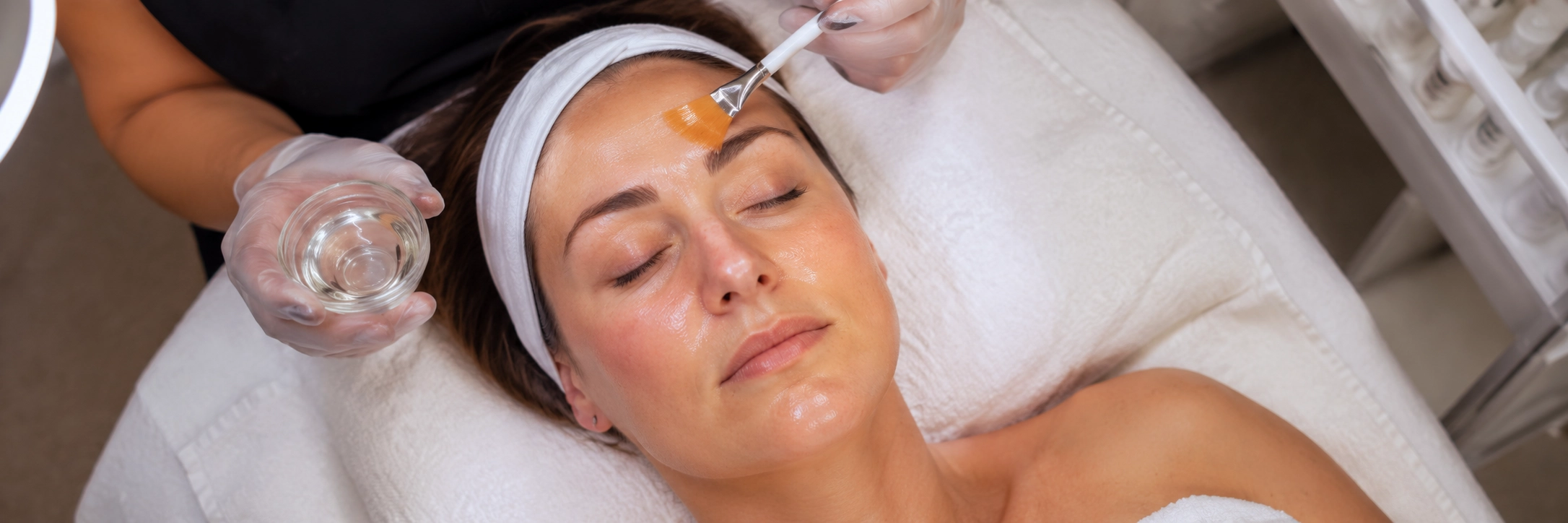
Na sua essência, um peeling químico é uma esfoliação controlada. Uma mistura cuidadosamente selecionada de ácidos ou enzimas é aplicada à pele, onde solta as ligações entre as células de pele mortas e danificadas, incentivando a sua remoção. O que as substitui é uma pele mais fresca, com um tom mais uniforme e mais recetiva aos cuidados de pele que já utiliza.
A palavra-chave é controlada. Um peeling profissional é calibrado para o seu tipo de pele, as suas preocupações e o nível de mudança que procura. É isso que separa um peeling clínico de qualquer coisa que faria em casa.
Os Tipos de Peelings e o Que Eles Visam
Nem todos os peelings são iguais, e o mais adequado depende do que a sua pele realmente precisa.
Cascas leves Use enzimas suaves ou ácidos de baixa concentração para iluminar e refinar sem tempo de recuperação significativo. São uma excelente opção de manutenção e um bom ponto de partida para quem é novo na esfoliação profissional. A pele fica polida e renovada, geralmente no mesmo dia.
Cascas médias aprofundar, abordando preocupações mais estabelecidas como hiperpigmentação, danos solares, cicatrizes de acne, melasma e os primeiros sinais de envelhecimento. Alguma descamação e vermelhidão ligeira durante alguns dias é normal e esperado. É o sinal visível de que a pele se está a renovar ativamente.
Peelings mais profundos produzem os resultados mais significativos e são reservados para preocupações específicas onde uma abordagem mais intensiva é clinicamente apropriada. A recuperação leva mais tempo, mas os resultados também.
Que Peelings Químicos Podem Melhorar
O leque de preocupações que respondem bem à esfoliação química é mais amplo do que a maioria das pessoas imagina: tom e textura de pele irregulares, danos solares e manchas da idade, descoloração pós-acne, linhas finas, poros dilatados, tez baça, rosácea e melasma. Uma série de peelings espaçados por várias semanas produz, tipicamente, uma melhoria mais significativa e duradoura do que uma única sessão.
Uma Palavra sobre o Tempo Sazonal
A primavera e o outono são tradicionalmente consideradas as melhores estações para peelings químicos na Nova Inglaterra, quando a exposição solar é menor e a pele tem menos probabilidade de estar recém-bronzeada. Dito isto, peelings leves podem ser realizados durante todo o ano com proteção solar adequada. Se está a considerar um peeling médio ou mais profundo, agendá-lo fora do pico do verão tornará a recuperação mais confortável e protegerá os seus resultados.
O que esperar no Spa Noor
Todos os peelings no Spa Noor começam com uma avaliação da pele, de modo que a formulação e a profundidade sejam adequadas às necessidades da sua pele nesse dia. Não aplicamos o mesmo peeling a todos os rostos. A consulta é onde discutimos as suas preocupações, a sua tolerância para o tempo de inatividade e qual é o plano de tratamento realista.
Se tem curiosidade sobre peelings químicos e quer perceber qual a abordagem mais adequada para a sua pele, uma conversa é o ponto de partida ideal.
O Spa Noor fica em Fall River, MA. Ao serviço da região do SouthCoast de Massachusetts, incluindo New Bedford, Taunton e arredores.